
The Ultimate Guide to Aluminium Kitchen Cabinets in Singapore & Malaysia
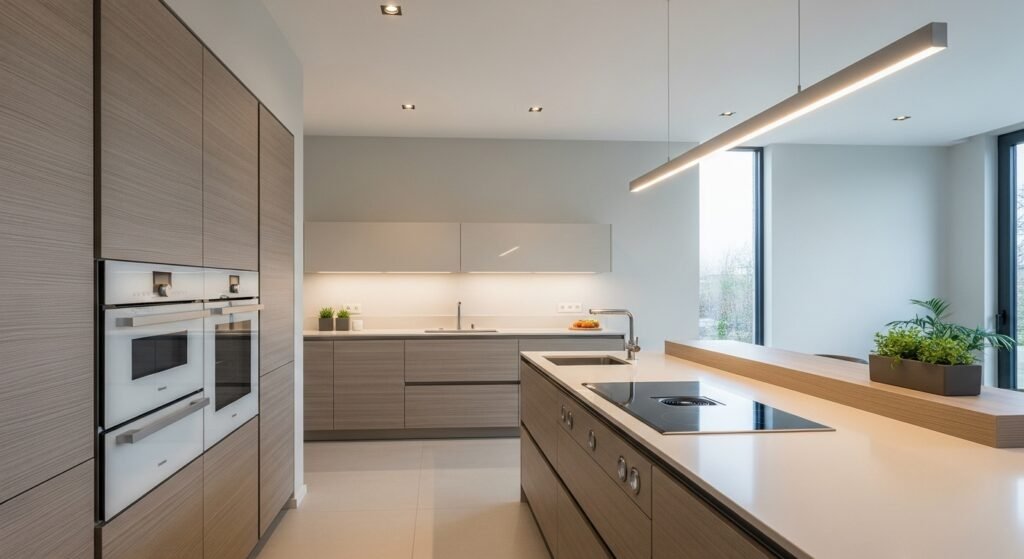
Introduction: Are aluminium kitchen cabinets right for you? We break down the pros, cons, pricing, and latest wood-grain designs. Say goodbye to termites and water damage forever.
If you are living in Singapore or Malaysia, you know the struggle. The humidity here isn’t just uncomfortable for us; it is a relentless enemy to our furniture. You have probably seen it happen: that sinking feeling when you open the cabinet under your sink and smell that musty, damp odor. Or worse, seeing a pile of sawdust in the corner—the tell-tale sign of a termite invasion.
For decades, homeowners have been forced to choose between style and durability. You could have a beautiful wooden kitchen that might rot in five years, or a cold, industrial stainless steel kitchen that looks like a restaurant back-of-house. But in 2025, the game has changed.
Enter the Aluminium Kitchen Cabinet. Once a niche product, it is now taking over the renovation market in Southeast Asia. But is it really the “miracle material” everyone claims it to be? In this comprehensive guide, we are going to deep dive into everything you need to know about aluminium cabinetry—from the alloy grade to the latest 4G glass finishes. By the end of this post, you will know exactly if this is the right investment for your home.
Section 1: What Exactly is a "Full Aluminium" Cabinet?
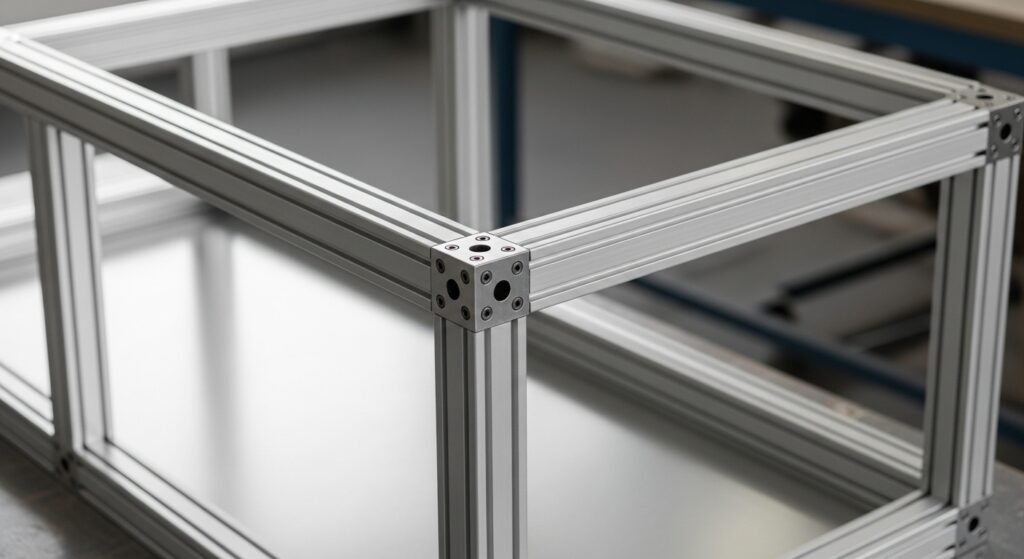
When we say “Full Aluminium,” we don’t mean just the door frames or the handles. We are talking about the entire carcass (the body of the cabinet).
In a traditional kitchen, the doors might be sleek acrylic, but the internal box is usually made of plywood or particleboard. These materials act like sponges. When your pipe leaks (and it eventually will), or when humidity levels spike, these wood composites absorb moisture, swell, and lose their structural integrity.
A Full Aluminium Kitchen Cabinet is constructed entirely from aluminium profiles.
The Frame: High-grade aluminium alloy (often 6063 grade, used in architectural windows).
The Panels: Aluminium sheets powder-coated for protection.
The Shelves: Reinforced aluminium planks.
There is zero wood. Zero organic matter. This means there is absolutely nothing for bacteria to breed on, and nothing for termites to eat.
Section 2: The 5 Major Benefits for SG & MY Homes
Why are homeowners in Singapore (HDB/Condo) and Malaysia (Landed/High-rise) willing to pay a premium for aluminium? Let’s break down the benefits.
1. 100% Waterproof (Not Just Water-Resistant)
Wood can be “water-resistant” with sealants, but aluminium is inherently waterproof. You could flood your kitchen, submerge these cabinets in water for a week, pull them out, wipe them down, and they would be structurally identical. For the area under your sink—the highest risk zone in any kitchen—aluminium is the only logical choice.
2. The Termite Solution
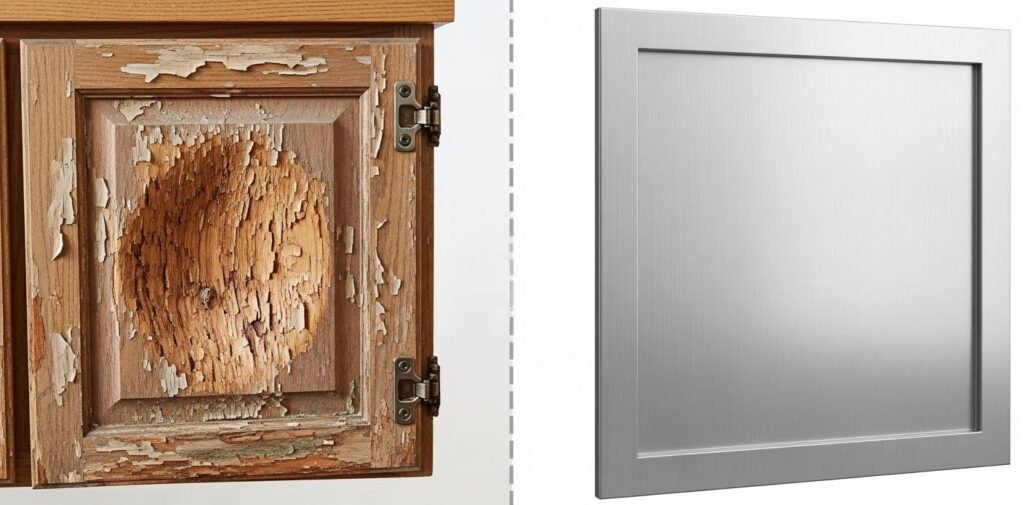
Termites are a nightmare in tropical Southeast Asia. They can eat through a solid wood cabinet in months, often silently from the back against the wall. By the time you see them, the damage is done.
Aluminium is metal. Termites cannot eat metal. It’s that simple. By installing aluminium cabinets, you are effectively “termite-proofing” the most expensive fixture in your home.
3. Fire Resistance & Safety
In the unfortunate event of a kitchen fire, wooden cabinets act as fuel, spreading the flames. Aluminium has an extremely high melting point (over 600°C) and does not burn. It acts as a fire retardant, giving you precious time and safety.
4. Zero Formaldehyde & Odorless
New furniture smell? That’s often VOCs (Volatile Organic Compounds) off-gassing from the glues used in plywood. Formaldehyde is a known carcinogen. Since aluminium cabinets are assembled using mechanical fasteners rather than chemical adhesives, they are virtually odorless and E0 grade (safe for babies and elderly).
5. Ease of Cleaning
Oil spills? Curry stains? Sambal splatters? On wood, these can stain permanently if not wiped immediately. On powder-coated aluminium, they sit on the surface. A simple wipe with a damp cloth removes even stubborn grease. It is the most hygienic surface for food preparation.
Section 3: Addressing the Myths (The Cons)
No material is perfect. Let’s address the common concerns you might have about switching from wood to metal.
Myth 1: "It looks cold and industrial."
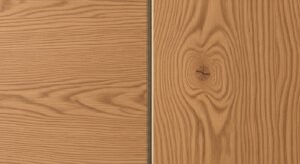
Reality: This used to be true 10 years ago. Today, thanks to Sublimation Technology (Heat Transfer), we can print high-definition wood grains directly onto the aluminium. We also have matte finishes, soft-touch surfaces, and 4G glass doors. Most guests won't even know it's aluminium until they knock on it.
Myth 2: "It’s noisy (The Clanking Sound)."
Reality: Metal on metal does make noise. However, high-end aluminium cabinets solve this in two ways:
Infill Technology: Some panels are filled with sound-dampening foam honeycomb cores.
Soft-Close Mechanisms: We use premium hinges (like Blum) and rubber bumpers. You will never hear a “clang,” just a soft, satisfying “click.”
Myth 3: "It dents easily."
Reality: Aluminium is softer than steel, yes. If you take a hammer to it, it will dent. But for normal daily use—pots, pans, plates—it is incredibly resilient. Powder coating also makes it scratch-resistant against keys and utensils.
Section 4: Design & Customization Options
Customization is where we shine. Since we manufacture locally or work with direct factories, your options are limitless.

The Minimalist / Muji Style: Choose a light oak wood grain transfer. It gives the warmth of wood but the strength of metal.
The Modern Luxury: Go for dark grey or black powder coating with gold handles.
The Sleek Look: 4G Glass Doors (Aluminium frame with glass front) are incredibly popular in Malaysia right now. They reflect light, making small kitchens look bigger.
Not ready to commit? [Explore our full product specifications and gallery first >]
Conclusion: Is the Price Worth It?
Let’s talk numbers. Yes, an Aluminium Kitchen Cabinet will typically cost 20-30% more upfront than a standard plywood kitchen.
However, consider the “Cost of Ownership”:
Wood Kitchen: Costs $5,000. Lasts 5-7 years before humidity issues/termites. Replacement cost: Another $5,000 + hassle of renovation.
Aluminium Kitchen: Costs $6,500. Lasts 20-25 years. Zero maintenance.
If you intend to stay in your home for the long term, aluminium is actually the cheaper option. It is a “buy once, cry once” investment.
Ready to transform your kitchen into a waterproof, termite-proof fortress?